What is Facial Longevity Science?
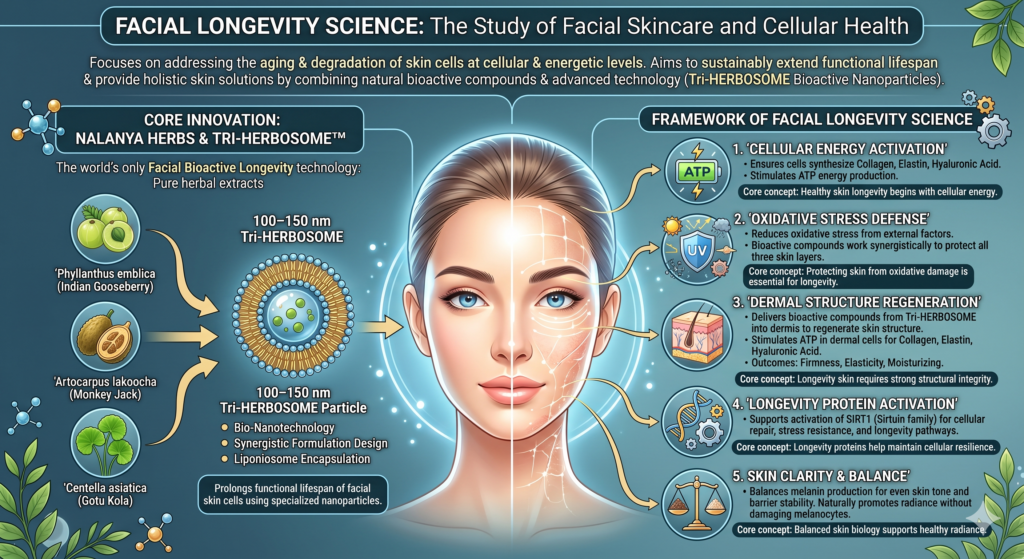
Facial Longevity Science is the study of facial skincare that prioritizes addressing the aging and degradation of skin cells at both the cellular and energetic levels. It aims to sustainably extend the functional lifespan of facial skin cells and provide holistic solutions for skin health by combining natural bioactive compounds with advanced modern technology (Facial Bioactive Longevity: Tri-HERBOSOME Bioactive Nanoparticles).
Framework of Facial Longevity Science
1. Cellular Energy Activation
Ensures facial skin cells have sufficient energy to continuously synthesize essential skin structures, including:
- Collagen protein
- Elastin protein
- Hyaluronic Acid
The Tri-HERBOSOME particles, sized between 100–150 nanometers (Facial Bioactive Longevity), significantly stimulate ATP energy production within facial skin cells, enabling them to function at peak efficiency.
Core Concept: Healthy skin longevity begins with cellular energy.
2. Oxidative Stress Defense
One of the primary causes of facial aging is oxidants (free radicals) generated by both internal and external factors, including:
- UV radiation
- Pollution
- Metabolic oxidation (cellular metabolism within skin cells)
Bioactive compounds derived from Phyllanthus emblica, Artocarpus lakoocha, and Centella asiatica work synergistically to reduce oxidative stress and protect all three layers of the facial skin structure from oxidative damage.
Core Concept: Protecting skin from oxidative damage is essential for longevity.
3. Dermal Structure Regeneration
The core foundation of strong, healthy skin lies within the dermis layer. The 100–150 nm Tri-HERBOSOME particles are engineered to deliver and release bioactive compounds from three pure herbal extracts directly into the dermis. This effectively regenerates the skin structure to extend the functional lifespan of facial skin cells.
Tri-HERBOSOME particles stimulate ATP energy production within dermal cells, restoring structural health to the dermis by producing:
- Collagen
- Elastin
- Hyaluronic Acid
These elements are vital to the key physical characteristics of healthy skin:
- Firmness
- Elasticity
- Moisturizing
Core Concept: Longevity skin requires strong structural integrity.
4. Longevity Protein Activation
Proteins in the Sirtuin family (SIRT1) play a crucial role in regulating:
- Cellular repair
- Stress resistance
- Longevity pathways
The bioactive compounds within the 100–150 nm Tri-HERBOSOME particles support the activation of SIRT1, which is directly linked to extending the functional lifespan of skin cells and fostering long-term skin resilience.
Core Concept: Longevity proteins help maintain cellular resilience.
5. Skin Clarity & Balance
Long-term healthy skin requires:
- Balanced melanin production
- An even skin tone
- Barrier stability
Bioactive compounds from Artocarpus lakoocha and other selected herbs support skin balance and naturally promote a bright, radiant complexion without damaging melanocytes.
Core Concept: Balanced skin biology supports healthy radiance.
Core Innovation of NALANYA HERBS
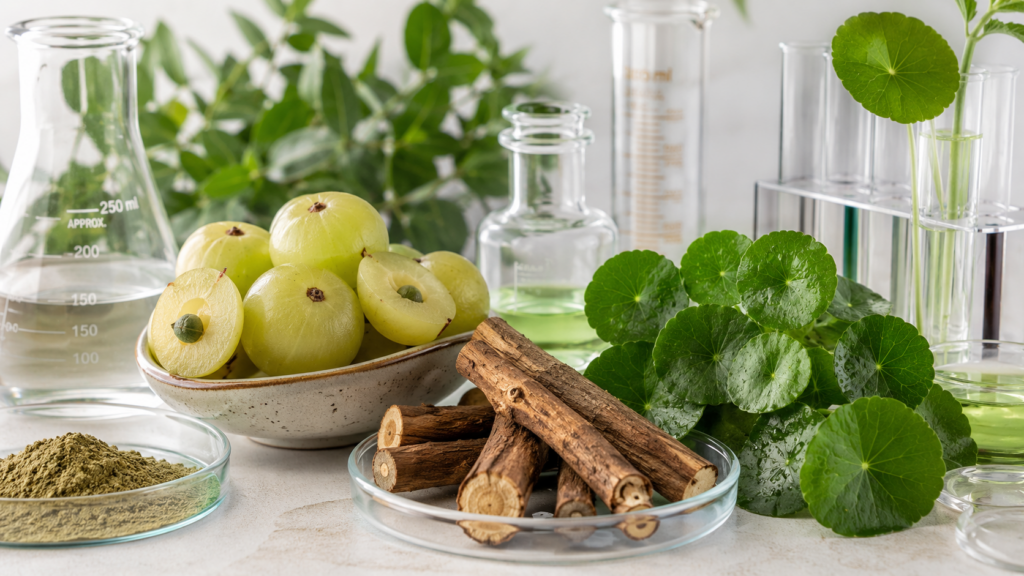
Tri-HERBOSOME™ particles represent the world’s only Facial Bioactive Longevity technology. Sized at 100–150 nm, it is developed from pure bioactive compounds extracted from three potent herbs:
- Phyllanthus emblica (Indian Gooseberry)
- Artocarpus lakoocha (Monkey Jack)
- Centella asiatica (Gotu Kola)
This innovation is powered by three core pillars:
- Bio-Nanotechnology: Scales particles down to 100–150 nanometers, allowing them to efficiently penetrate deep into the dermis layer and release bioactive substances directly to Fibroblast cells.
- Synergistic Formulation Design: A precise formulation where the bioactive compounds from the three herbs mutually enhance one another. Perfecting this synergy is the most challenging breakthrough in the discovery of Tri-HERBOSOME particles.
- Liponiosome Encapsulation: A highly efficient delivery system that encapsulates and releases bioactive compounds by permeating through intercellular spaces without disrupting or damaging facial skin cells.
Ultimately, Tri-HERBOSOME particles embody Tri-HERBOSOME Longevity Science—a biological approach utilizing these specialized nanoparticles to prolong the functional lifespan of facial skin cells.
FAQ – Frequently Asked Questions
Q1. How does Facial Longevity differ from Anti-Aging?
- Anti-Aging: Focuses on treating surface-level symptoms by masking wrinkles or topically replacing missing collagen and moisture using synthetic ingredients.
- Facial Longevity: Targets the root causes of aging by mitigating structural damage from free radicals and boosting ATP energy to naturally stimulate the cellular production of Collagen, Elastin, Hyaluronic Acid, and SIRT1 proteins.
Q2. How does modern-era skincare differ from traditional skincare?
- Modern Skincare: Focuses on sustainably extending the youthful vitality of facial skin cells. It prioritizes addressing skin aging at the cellular, DNA, genetic, and mitochondrial levels, while reversing the decline of ATP energy.
- Traditional Skincare: Focuses on short-term anti-aging interventions that tackle surface symptoms. This includes topically coating the skin for moisture, trying to supply topical collagen (which is scientifically ineffective as the molecules are too large to penetrate the skin barrier), or forcefully brightening the skin by destroying melanocytes using harsh synthetic chemicals.
Q3. Why is Facial Longevity crucial for modern skincare?
- Facial Longevity is a cellular-level approach to skincare that emphasizes “sustainability” to prolong the functional life of skin cells. It does not look for temporary fixes; instead, it regenerates skin structures and generates internal cellular energy. This ensures a long-term youthful and healthy appearance from within, rather than relying solely on short-term cosmetic procedures like plastic surgery, fillers, or Botox.
Q4. How should we choose skincare that aligns with modern Facial Longevity?
- Select skincare with strong Antioxidant properties to neutralize free radicals caused by internal and external metabolic processes.
- Select skincare that can actively stimulate cellular ATP energy production.
- Select skincare that can successfully activate SIRT1 (longevity protein) expression.
Summary: Facial Longevity Science
In the modern era, our skin faces a barrage of external stressors (UV rays, dust, pollution) and internal challenges (rising free radicals, declining NAD+, and dropping ATP energy levels). These are the definitive catalysts of skin aging.
Therefore, sustainable facial care according to Facial Longevity Science means resolving cellular aging and degradation at both the energetic and cellular levels to comprehensively extend the functional, youthful life of facial skin cells.